
 English
  Arabic
Light Vehicle Theory Test 1
01/20
1.Which vehicle component forms its basic structural frame?
The chassis serves as the backbone of a vehicle, providing the main structural support on which all other components such as the engine, transmission, suspension, and body are mounted. It is designed to withstand various forces and stresses encountered during driving, including acceleration, braking, and road impacts. A strong and well-designed chassis ensures stability, safety, and proper alignment of all parts, allowing the vehicle to function efficiently and maintain control on the road. Without a solid chassis, the vehicle would lack the necessary strength and balance required for safe operation.
01/20
Progress
Light Vehicle Theory Test 1
02/20
2.What is the definition of an intersection?
An intersection is the area where two or more roads come together, cross each other, or branch off at the same level, allowing vehicles to change direction or continue in different paths. It includes not only the exact crossing point but also the surrounding space where vehicles may enter, exit, or turn. Intersections are critical parts of road networks, requiring drivers to be attentive, follow traffic signals or signs, and give way when necessary to ensure smooth and safe movement of traffic.
02/20
Progress
Light Vehicle Theory Test 1
03/20
3.When turning right (1st Exit) at a two-lane roundabout, which lane should you approach in?
When turning right at the first exit of a two-lane roundabout, you should approach the roundabout using the right lane and continue in that lane while navigating through it. This positioning helps maintain a smooth flow of traffic and clearly signals your intention to other drivers. Staying in the correct lane reduces confusion and minimizes the risk of collisions, especially in busy roundabouts where multiple vehicles may be entering and exiting simultaneously. As you approach your exit, remain alert, use your indicator appropriately, and exit safely without cutting across other lanes.
03/20
Progress
Light Vehicle Theory Test 1
04/20
4.On roads with one lane or more in one direction, what does the direction mark (road arrow) indicate?
On roads that have one or more lanes in the same direction, the direction mark or road arrow indicates that all vehicles must move only in the direction shown by the arrow. It clearly guides drivers to follow a single flow of traffic across all lanes, helping to maintain order and prevent confusion. These markings also imply that reversing direction, making U-turns, or driving against the indicated flow is not allowed, ensuring safer and more organized traffic movement on the road.
04/20
Progress
Light Vehicle Theory Test 1
05/20
5.What is the primary purpose of maintaining a safety distance between your vehicle and the vehicle in front?
The primary purpose of maintaining a safety distance between your vehicle and the vehicle ahead is to give yourself enough time and space to react in case of a sudden stop or unexpected situation. When the vehicle in front brakes abruptly, a proper gap allows you to slow down or stop smoothly without colliding. This distance acts as a safety buffer, reducing the risk of rear-end accidents and ensuring better control of your vehicle, especially in heavy traffic or at higher speeds.
05/20
Progress
Light Vehicle Theory Test 1
06/20
6.When you see a No Parking sign (circular with red frame, blue background, and one red diagonal), what does it mean you should do?
When you see a No Parking sign, it means that you are not allowed to park your vehicle in that area under any circumstances. This restriction is put in place to keep the road clear for smooth traffic flow and to avoid congestion or obstruction. While brief stopping may sometimes be permitted for picking up or dropping off passengers, leaving the vehicle unattended or parked for any duration is strictly prohibited, and doing so may result in fines or penalties.
06/20
Progress
Light Vehicle Theory Test 1
07/20
7.A circular sign with a thick red border, a white background, and a symbol showing a red car silhouette on the left next to a black car silhouette on the right. What does this road sign indicate?
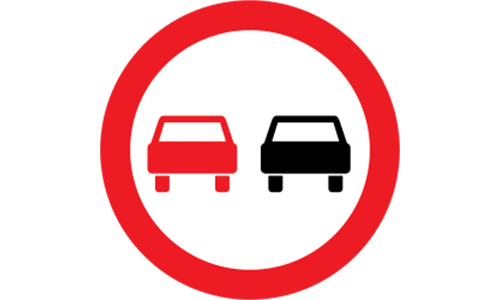
This sign indicates the start of a no overtaking zone, where drivers are not allowed to pass or overtake other vehicles. The symbol with one red car and one black car clearly warns that overtaking is restricted from that point onward. This rule is usually applied in areas where visibility is limited or road conditions make overtaking dangerous, such as curves, hills, or narrow sections. Drivers must remain in their lane and follow the vehicle ahead until they reach a point where overtaking is permitted again, ensuring safer traffic movement.
07/20
Progress
Light Vehicle Theory Test 1
08/20
8.What should you do if you see a No Turning sign with a red frame and diagonal lines?
When you see a No Turning sign with a red frame and diagonal line, it means you are strictly prohibited from making a turn in the direction indicated by the sign. This restriction is usually placed at locations where turning could be dangerous or disrupt the flow of traffic, such as busy intersections or high-speed roads. Drivers must continue straight or follow an alternative permitted route, ensuring safer and more organized movement of vehicles on the road.
08/20
Progress
Light Vehicle Theory Test 1
09/20
9.What is the purpose of Direction change lights (turn signals) on a vehicle?
The purpose of direction change lights, also known as turn signals, is to clearly communicate your intended movement to other road users. By using them before turning or changing lanes, you give advance warning to drivers, cyclists, and pedestrians, allowing them to adjust their speed or position accordingly. This helps prevent confusion, reduces the risk of collisions, and ensures smoother and safer traffic flow, especially in busy or high-speed driving conditions.
09/20
Progress
Light Vehicle Theory Test 1
010/20
10.What should you do if you are driving into the glare of sunlight?
When driving into the glare of sunlight, you should reduce your speed and use protective aids such as sunglasses or a sun visor to improve visibility. Bright sunlight can temporarily blind you or make it difficult to see the road, vehicles, or pedestrians clearly. Slowing down gives you more time to react to any sudden obstacles, while using proper eye protection helps reduce the intensity of the glare, allowing you to maintain better control and drive more safely.
010/20
Progress
Light Vehicle Theory Test 1
011/20
11.When should vehicle headlights be used at night?
Vehicle headlights should be used during the period between sunset and sunrise to ensure that you can clearly see the road ahead and be visible to other road users. Driving at night reduces natural visibility, so headlights play a crucial role in illuminating obstacles, road signs, and pedestrians. Using headlights during this time is a legal requirement and also helps prevent accidents by making your vehicle easily noticeable to others on the road.
011/20
Progress
Light Vehicle Theory Test 1
012/20
12.What is the primary definition of First Aid?
First aid is the immediate and temporary care provided to a person who is injured or suddenly becomes ill, before professional medical assistance is available. Its main purpose is to preserve life, prevent the condition from worsening, and promote recovery. By giving prompt attention at the scene, first aid helps stabilize the person and reduces the risk of further harm until trained medical personnel take over.
012/20
Progress
Light Vehicle Theory Test 1
013/20
13.A triangular sign with a thick red border, a white background, and a black symbol showing vertically arranged red, yellow, and green lights. What does this road sign indicate?
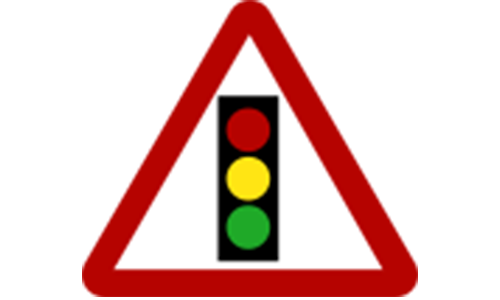
This triangular warning sign indicates that traffic signals are ahead, alerting drivers to be prepared for a controlled intersection. It warns that you may soon encounter red, yellow, or green lights, and you should adjust your speed accordingly. Drivers must stay attentive, be ready to stop if the signal changes, and follow the traffic lights to ensure safe and orderly movement through the intersection.
013/20
Progress
Light Vehicle Theory Test 1
014/20
14.What does this road sign indicate?
This sign clearly indicates that the entry of any animals, particularly livestock like camels, is forbidden on this road or in this zone.
014/20
Progress
Light Vehicle Theory Test 1
015/20
15.What does this road sign indicate?
This mandatory sign indicates that vehicles are required to travel only in the straight-ahead direction.
015/20
Progress
Light Vehicle Theory Test 1
016/20
16.An image showing two vertical rectangular signs with alternating red and white diagonal stripes. What do these road markings indicate?

These red and white diagonal striped hazard plates indicate the presence of an obstacle or danger on or near the road. They are used to draw the driver’s attention to objects such as barriers, road dividers, or narrow sections that may pose a risk. The bold alternating stripes make the hazard clearly visible from a distance, especially in low-light conditions. Drivers should slow down, stay alert, and carefully navigate around the indicated obstruction to ensure safe passage.
016/20
Progress
Light Vehicle Theory Test 1
017/20
17.What is the compartment for the driver and passengers called?
The body of a vehicle is the enclosed structure designed to accommodate the driver and passengers. It provides seating, protection from weather conditions, and safety features such as doors, windows, and airbags. The body also contributes to the overall design and comfort of the vehicle, ensuring that occupants can travel safely and conveniently while being shielded from external elements.
017/20
Progress
Light Vehicle Theory Test 1
018/20
18.Which of the following is characteristic of an Unequal Rights Intersection?
An unequal rights intersection is one where traffic is controlled by signals, signs, or authorities, meaning that not all roads have the same priority. It is typically equipped with traffic lights, stop signs, or give-way signs to regulate the movement of vehicles. These controls clearly indicate which drivers must stop, yield, or proceed, helping to manage traffic safely and reduce confusion at the intersection.
018/20
Progress
Light Vehicle Theory Test 1
019/20
19.When approaching a roundabout to take the 1st exit, what signal should you use?
When approaching a roundabout to take the first exit, you should use the right turn signal to clearly indicate your intention to other road users. Signaling in advance helps drivers behind and around you understand that you plan to exit early, allowing them to adjust their speed and position safely. Proper use of indicators at roundabouts improves traffic flow and reduces the risk of confusion or accidents.
019/20
Progress
Light Vehicle Theory Test 1
020/20
20.What is strictly prohibited on roads with one lane and two directions separated by a central island or longitudinal continuous lines?
On roads with one lane in each direction separated by a central island or continuous longitudinal lines, overtaking is strictly prohibited. These road features indicate that it is unsafe to cross into the opposite lane, often due to limited visibility, narrow road width, or high risk of head-on collisions. Drivers must remain in their lane and follow the vehicle ahead, ensuring safer and more controlled traffic movement.
020/20
Progress
Your Progress 0/20
- 1
- 2
- 3
- 4
- 5
- 6
- 7
- 8
- 9
- 10
- 11
- 12
- 13
- 14
- 15
- 16
- 17
- 18
- 19
- 20
0 Correct
x 0 Incorrect
- Passing Score 80%